One wrong material decision in a seawater reverse osmosis plant can show up as pitting in months, not years. We have seen buyers try to save on upfront pipe cost with 316L or even 2205 in warm, chlorinated Gulf seawater service, only to face leaks, shutdown risk, and expensive spool replacement far earlier than planned.
That is exactly why Saudi Arabia, the UAE, Qatar, Oman, and Kuwait continue to specify super duplex 2507 for critical desalination piping. In our experience, UNS S32750 earns its place where chloride levels are high, temperatures are elevated, and uptime matters more than a short-term material saving.
Why super duplex 2507 is the benchmark for Gulf desalination piping
Super Duplex 2507, designated UNS S32750 and commonly supplied to ASTM A790 for seamless and welded pipe or ASTM A928 for electric-fusion-welded pipe, was developed for aggressive chloride service. Its chemistry typically includes around 25% chromium, 7% nickel, 4% molybdenum, and nitrogen additions that push the PREN above 40. That PREN level is the reason engineers turn to this grade for seawater intake lines, high-pressure RO trains, reject brine systems, and firewater lines in coastal plants.
In Gulf desalination duty, corrosion is not theoretical. Feedwater can be warm, oxygenated, biologically active, and intermittently chlorinated. Concentrated brine raises the chloride burden even further. Under those conditions, austenitic stainless grades such as 316L simply do not offer enough pitting and crevice corrosion resistance. Duplex 2205 performs well in many industrial services, but at higher chloride concentration and temperature it reaches its limits faster. Super duplex 2507 gives designers a wider operating window and a much better safety margin against localized attack.
The mechanical side matters too. Super duplex 2507 typically offers a minimum yield strength around 550 MPa, far above 316L and comfortably above 2205. That allows thinner wall sections in many pressure classes, lower spool weight, and easier support design without sacrificing integrity. For large desalination projects where hundreds of meters of pipe are installed across racks, galleries, and skids, that weight saving becomes a real construction advantage.
Engineering note from our metallurgist: the ASTM minimum isn't the same as the practical minimum.
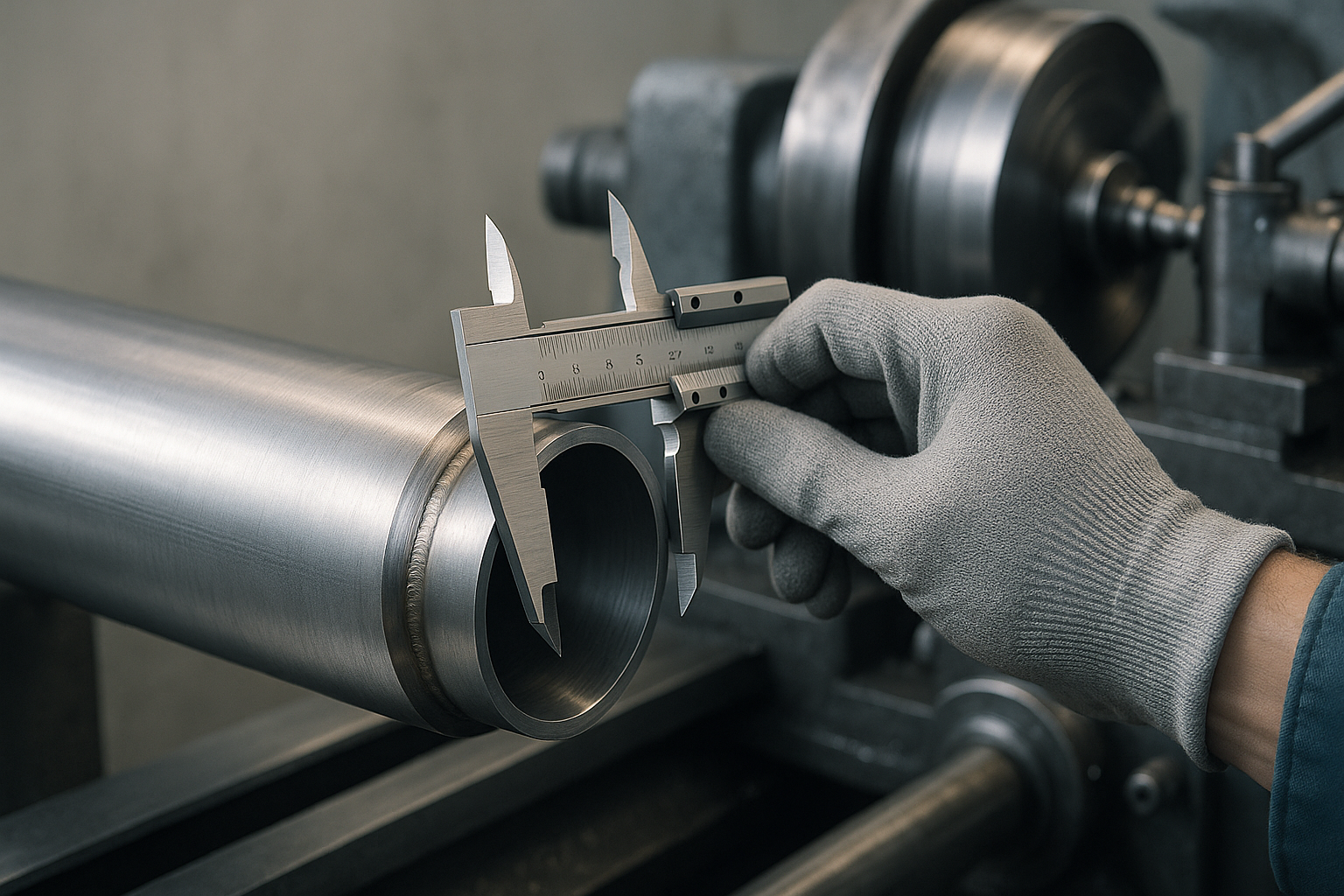
Better resistance to pitting, crevice attack, and chloride SCC in warm seawater
The Gulf environment is unusually demanding because seawater temperatures are often higher than what many European or North American specifications assume. Once temperature rises, the risk of pitting and crevice corrosion accelerates, especially under deposits, gaskets, clamps, and poorly flushed dead legs. Super duplex 2507 is selected because it resists these localized corrosion mechanisms far better than 316L and materially better than 2205 when chlorides and temperature both trend upward.
Stress corrosion cracking is another reason this grade is favored. Chloride SCC is a known weakness of common austenitic stainless steels under tensile stress at elevated temperature. In desalination plants, thermal cycles, residual fabrication stress, pressure pulsation, and chlorination all work against the material. The duplex microstructure of 2507 gives much stronger resistance to chloride SCC, which is especially valuable in high-pressure RO piping and energy recovery loops where cyclic loading is part of normal operation.
Where project specifications are strict, we often see requirements tied to ASTM G48 Method A for pitting resistance verification, ferrite control by ASTM E562, and supplementary testing to NORSOK or end-user standards. Those are not box-ticking exercises. They are practical controls that help ensure the delivered pipe has the corrosion performance the designer paid for, particularly after welding and heat treatment.
High strength means lighter pipe, higher pressure capability, and smarter lifecycle cost
Desalination EPC contractors do not choose super duplex 2507 only because it survives seawater. They choose it because it often improves the total installed solution. With a minimum yield strength roughly three times that of 316L, the grade can support higher internal pressure with reduced wall thickness in many designs, subject of course to ASME B31.3, ASME Section VIII, and project-specific corrosion allowance rules. That can reduce pipe weight, flange loads, and support steel tonnage.
For reverse osmosis systems, where operating pressures commonly run in the 60 to 80 bar range and sometimes higher depending on train design and salinity, that strength reserve is valuable. It gives engineers more flexibility around pressure containment while maintaining corrosion resistance in chloride-rich service. In skid-mounted packages, lower weight also simplifies lifting, transport, and module integration, which is a practical benefit often missed in early material comparisons.
Our quality team rejects roughly 1 in 40 incoming heats on the same criterion.
The trade-off is straightforward: super duplex 2507 costs more per kilogram than 316L or 2205, and fabrication discipline must be tighter. But when we compare material cost against replacement shutdowns, offshore or coastal installation labor, and lost water production, the lifecycle economics are usually clear. In critical seawater service, the cheapest alloy on day one is rarely the cheapest alloy over 15 to 25 years.
Where Saudi and GCC desalination plants use this grade most effectively
Not every line in a desalination plant needs super duplex 2507. The smart approach is to place it where chloride severity, pressure, and consequence of failure justify the upgrade. In our experience, the grade is most commonly specified in the sections of the plant where warm seawater, concentrated brine, crevices, and pressure cycling come together. That is where lower alloy stainless grades tend to get exposed.
Typical applications include seawater intake headers, high-pressure RO feed piping, membrane skid manifolds, energy recovery device piping, brine reject lines, and selected chemical dosing or chlorinated seawater systems. We also see it in spool pieces near pumps, valves, and instrumentation where turbulence, stagnant pockets, and gasketed joints raise the risk of localized attack. In hybrid plants combining thermal and RO sections, material boundaries must be reviewed carefully because temperature and concentration can change quickly across the process.
- Use super duplex 2507 where chloride concentration is high, seawater is warm, and pressure is sustained or cyclic.
- Review crevice-prone details such as flanged joints, supports, clamps, threaded connections, and dead legs.
- Check chlorination practice including dose, frequency, and residual oxidant exposure during standby conditions.
- Match the whole system by aligning pipe, fittings, flanges, valves, fasteners, and weld consumables to avoid galvanic or weak-link failures.
- Specify testing clearly such as PMI, ferrite range, hydrotest, ASTM G48, and NDE requirements before procurement.
That last point matters in GCC projects. A premium pipe grade can still underperform if the fittings are downgraded, weld procedures are not qualified properly, or fabrication leaves heat tint and contamination behind. Material selection is a system decision, not a line item decision.
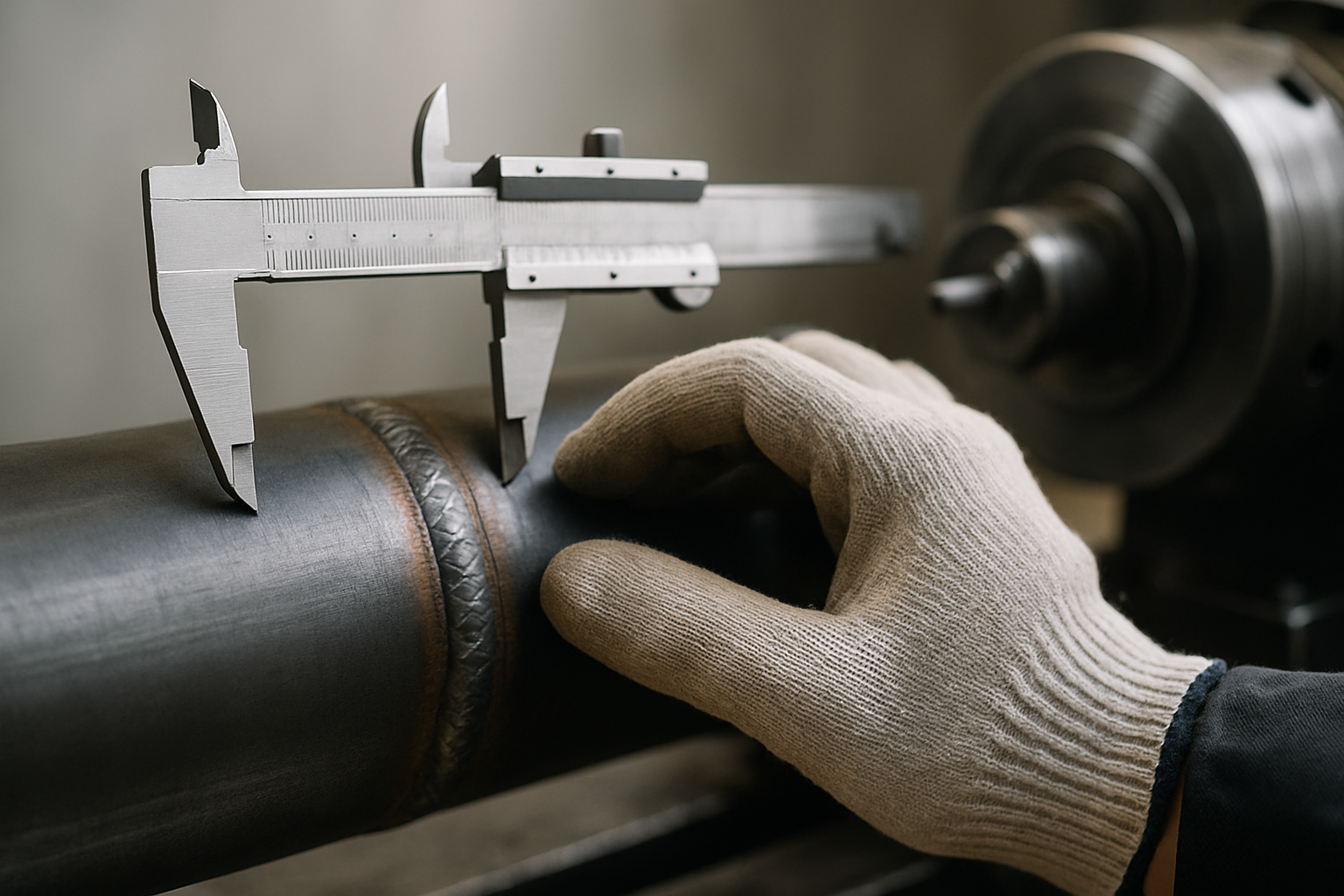
Standards, fabrication controls, and QA points that separate good pipe from risky pipe
For desalination projects in Saudi Arabia and across the Gulf, we commonly work to specifications referencing ASTM A790 UNS S32750, ASME SA790, ASTM A182 F53 for forged fittings and flanges, and ASTM A815 UNS S32750 for wrought fittings. End users may also reference NORSOK M-630 and relevant MDS requirements where offshore or high-integrity procurement philosophy carries into water infrastructure. For pressure design and fabrication, ASME B31.3 remains the usual piping code baseline.
We learned this the hard way on a 2019 nuclear-spec order — never compromised since.
Quality control on super duplex 2507 should go beyond dimensional checks and a basic mill test certificate. We recommend positive material identification, ferrite verification in the weld and base metal, solution annealed condition confirmation, and corrosion testing where the project demands it. Weld procedure qualification is critical because heat input and interpass temperature directly affect phase balance and corrosion resistance. Excessive heat can promote detrimental intermetallic phases; poor shielding or post-weld cleaning can leave heat tint that becomes a corrosion initiation site.
Buyers should also ask practical questions about manufacturing route and traceability. Is the pipe seamless or welded? What NPS and schedule range is available? Are ends beveled to ASME standards? Can the supplier provide impact testing at low temperature, full MTC to EN 10204 3.1 or 3.2, and third-party inspection? In our experience, the best procurement outcomes come when these details are locked before production, not argued over at dispatch stage.
Why GCC owners and EPCs keep specifying 2507 for long-term 0% claim rate on 2024-2025 nuclear-spec shipments
Saudi Arabia and its Gulf neighbors are investing heavily in water security. Large SWRO plants at Jubail, Ras Al Khair, Yanbu, Shuaibah, Taweelah, and similar coastal developments are expected to run hard, often in punishing marine conditions. Owners are not just buying pipe. They are buying availability, predictable maintenance, and confidence that a critical line will not become the weak point in a billion-dollar asset. That is where super duplex 2507 continues to justify itself.
We have found that project teams in the region are increasingly sophisticated about material selection. They compare not only alloy price, but also weldability, lead time, NDE acceptance rates, and field performance history in chlorinated seawater. Super duplex 2507 consistently stays on the approved list because it balances corrosion resistance and strength better than most alternatives for this exact service window. It is not the answer for every line, but for the harshest seawater duties in GCC desalination, it remains one of the most dependable choices available.
There is also a supply-chain reason. Established EPCs and end users prefer grades with a strong reference base, recognized ASTM and ASME coverage, and clear QA expectations. UNS S32750 checks those boxes. When specified correctly and fabricated with discipline, it gives the plant a much better chance of meeting design life without unpleasant corrosion surprises in the first operating cycle.
Field experience: this matters more on cold-drawn than hot-finished tubes.
Key Takeaways
For desalination plants in Saudi Arabia and across the Gulf, super duplex 2507 is chosen because the service is unforgiving and failure is expensive. The grade earns its premium where seawater temperature, chloride concentration, pressure, and uptime requirements all run high.
- Specify UNS S32750 for critical warm seawater, high-pressure RO, and concentrated brine piping where 2205 or 316L may not provide enough corrosion margin.
- Use recognized standards such as ASTM A790, ASME SA790, ASTM A815, and project QA requirements including PMI, ferrite checks, and ASTM G48 where required.
- Control fabrication tightly with qualified welding procedures, heat input limits, proper shielding, and full post-weld cleaning to preserve corrosion resistance.
- Evaluate total installed and lifecycle cost, not just alloy price per kilogram, especially for GCC plants where downtime and replacement work are extremely costly.