We have seen multimillion-dollar offshore packages delayed because a buyer tried to save a few percent on pipe material, only to face chloride pitting, rework, and unplanned replacement within the first service cycle. In oil and gas, where produced water, chlorides, H2S, and pressure all show up in the same line, material selection is not a paperwork exercise. It is a lifecycle decision, and that is exactly where Stancor duplex solutions earn their place.
For operators, EPC contractors, and stockists, the case for duplex is straightforward: higher strength than standard austenitic stainless grades, markedly better resistance to chloride attack, and a lower total installed cost when wall thickness, support loads, maintenance, and service life are evaluated together. In our experience, Duplex Stainless Steel Pipes are often the most balanced choice for aggressive process, topside, and subsea environments.
Why Duplex Stainless Steel Pipes Outperform in Oil & Gas Service
Duplex stainless steels combine an approximately balanced austenitic-ferritic microstructure, giving them a property set that conventional 304L or 316L cannot match in demanding oil and gas duty. Common pipe grades include UNS S31803 and UNS S32205, typically supplied as ASTM A790 seamless or welded pipe and ASTM A789 tubing. For more severe chloride and sour service conditions, super duplex grades such as UNS S32750 and UNS S32760 are widely specified, with chemistry and mechanical requirements aligned to ASTM, ASME, and project-specific MDS documents.
The practical advantage is not theoretical. Duplex grades typically offer yield strength around twice that of 316L, which allows thinner wall sections in many pressure-containing applications under ASME B31.3 or ASME Section VIII design rules. At the same time, their pitting resistance equivalent number, or PREN, is significantly higher. Standard duplex 2205 generally sits around PREN 35, while super duplex 2507 exceeds 40, making these materials much more capable in chloride-bearing media, seawater-adjacent systems, and produced-water handling.
That combination matters because oil and gas lines rarely fail from a single mechanism. External marine exposure, internal chlorides, crevice conditions under deposits, and stress from pressure cycling can all act together. Duplex helps address the full picture. When correctly specified, fabricated, and heat controlled during welding, it gives buyers a robust middle ground between 316L and much more expensive nickel alloys.
We learned this the hard way on a 2019 nuclear-spec order — never compromised since.
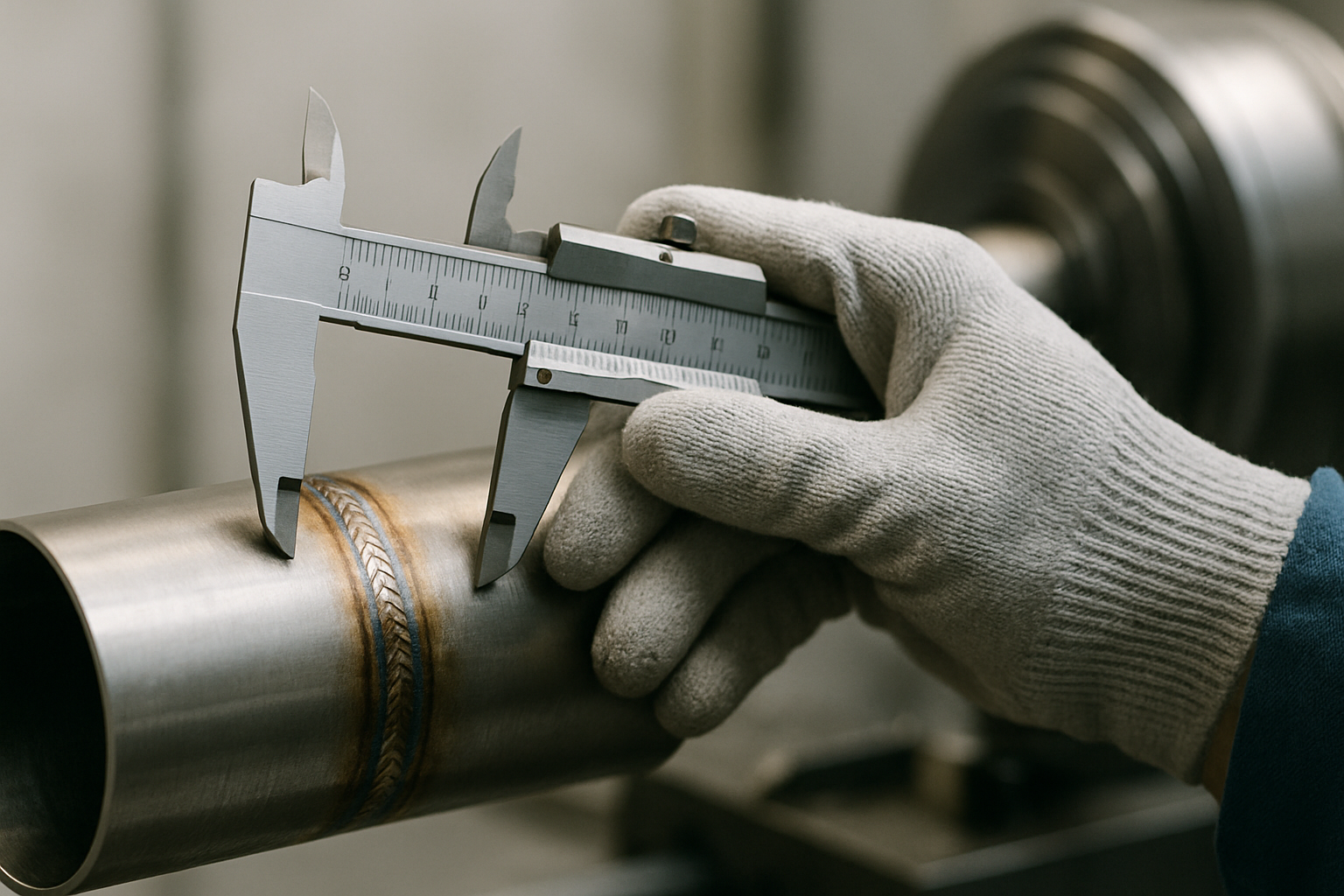
Superior Corrosion Resistance in Chlorides, CO2, and Sour Environments
Corrosion is the first reason many engineers move to duplex. In offshore and coastal plants, chloride pitting and crevice corrosion are constant threats, especially in dead legs, flange interfaces, and low-flow sections. Duplex 2205 offers a major step up from 316/316L in these conditions, and super duplex grades extend that margin further. For seawater systems, firewater lines, produced-water treatment, and heat exchanger circuits, this extra resistance can be the difference between stable operation and repeated intervention.
In sour service, material qualification must go beyond generic corrosion claims. Where H2S is present, buyers should verify compliance with NACE MR0175/ISO 15156 and project-specific hardness limits, heat treatment, and welding procedure qualification. For North Sea and other stringent offshore projects, NORSOK M-630 and M-650 requirements may also apply, especially for manufacturer qualification and material data sheet alignment. In our experience, the best results come when the pipe mill, fabricator, and end user agree early on chloride level, temperature, partial pressure of H2S, and expected upset conditions.
There are trade-offs. Duplex is not a universal answer for every acid system. In strong reducing acids or highly sour, high-temperature conditions, nickel alloys may still be required. Likewise, poor fabrication practice can damage the very corrosion resistance the buyer is paying for. Excessive heat input, poor purge quality, or uncontrolled interpass temperature can reduce phase balance and toughness in the heat-affected zone. Material selection and fabrication discipline have to work together.
Higher Strength Means Lower Weight and Smarter Design Margins
One of the most overlooked benefits of duplex pipe is structural efficiency. Standard duplex 2205 typically delivers minimum yield strength around 450 MPa, versus roughly 170 to 240 MPa for common austenitic stainless pipe grades. That higher allowable stress can permit thinner wall designs for equivalent pressure duty, subject of course to corrosion allowance, code calculations, and purchaser specification. On offshore topsides, that reduction in wall thickness can cascade into lower total weight, easier handling, and less load on supports and modules.
For long pipe runs, skid packages, and compact process modules, weight savings are not just a transport issue. Lower dead load can simplify support design, reduce lifting complexity, and improve installation productivity. In subsea umbilical hardware, chemical injection systems, and compact high-pressure service, the strength-to-weight ratio becomes even more attractive. We regularly see duplex specified where clients want stainless corrosion performance without the bulk associated with lower-strength alternatives.
In our 51 years at Stancor Tubular Products Pvt. Ltd., we've seen this come up often.
That said, strength should not be viewed in isolation. Designers still need to check impact toughness, fatigue loading, external pressure where relevant, and fabrication tolerances. Duplex also has different forming behavior than austenitic grades, with higher springback and greater forming loads. A supplier that understands cold work limits, solution annealing requirements where applicable, and weld repair restrictions will help prevent expensive shop-floor surprises.
Lifecycle Value Beats Low First Cost on Real Projects
Procurement teams often compare material options by purchase price per ton, which is exactly where the wrong decision starts. Duplex pipe may cost more upfront than carbon steel or 316L, but installed cost and lifecycle cost tell a different story. If a higher-strength grade allows reduced wall thickness, the tonnage gap narrows. When painting systems, corrosion monitoring, inhibitor dependence, replacement frequency, and shutdown risk are added, duplex often becomes the more economical option over the service life of the asset.
In produced-water service, seawater utility systems, and offshore process lines, the cost of one leak can dwarf the original pipe price difference. Lost production, hot work permits, rope access, insulation removal, NDT, and environmental exposure all add up quickly. We have seen operators standardize on duplex not because it was the cheapest line item, but because it was the least expensive material to live with over 15 to 25 years of operation.
Buyers should also consider supply-chain value. A reliable manufacturer can provide ASTM A790 pipe, EN 10216-5 equivalents where required, full traceability, PMI support, ferrite control records, hydrotest documentation, and third-party inspection packages. That reduces project friction during QA review and site acceptance. Material that arrives with clean documentation and consistent dimensional control saves time in fabrication yards, and time is often the most expensive commodity on an EPC schedule.
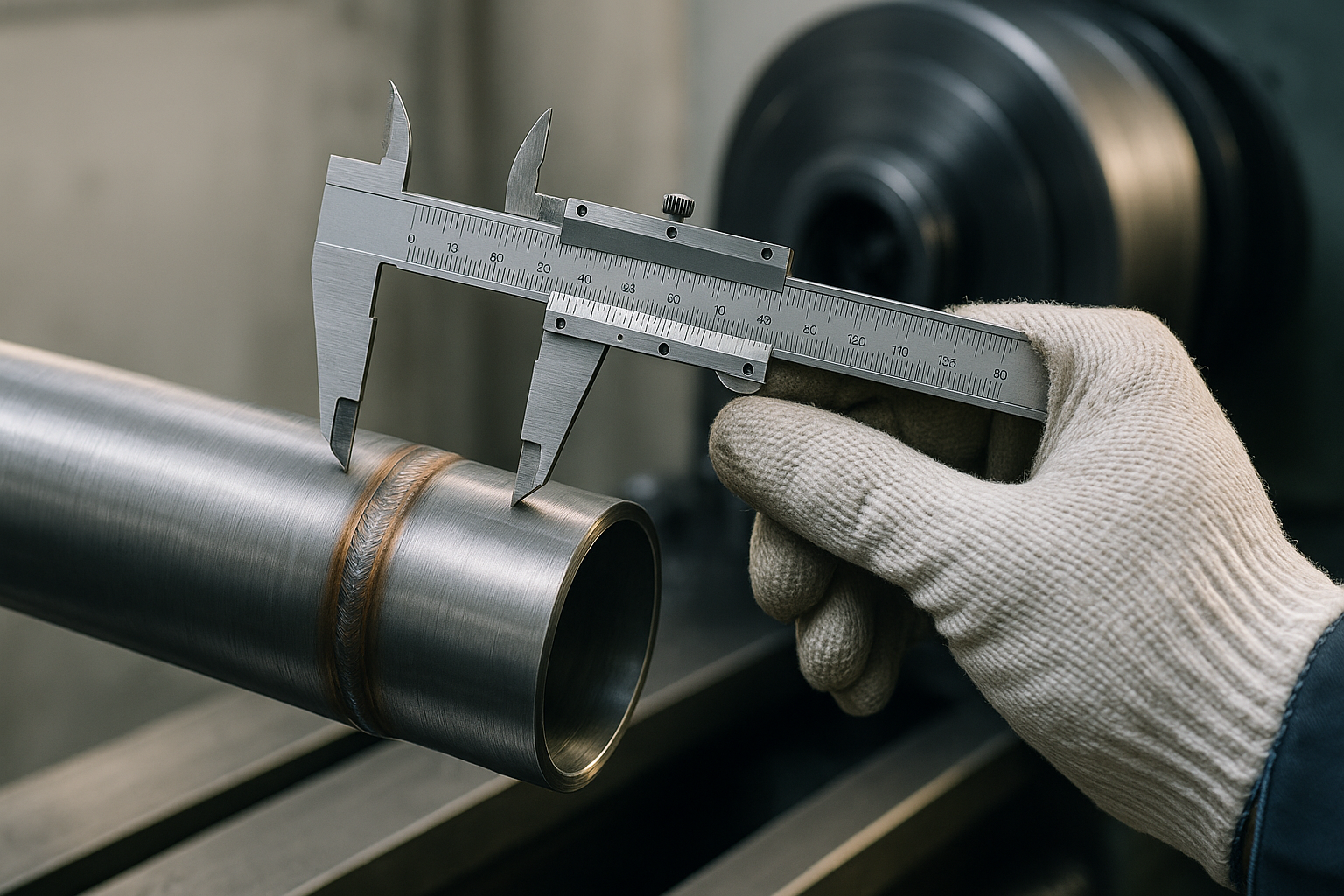
What to Check Before Specifying Duplex for Oil & Gas Lines
The best duplex project outcomes come from disciplined specification, not from choosing a grade name alone. A line carrying warm chlorides at moderate pressure may be well served by UNS S32205, while a seawater-exposed or more aggressive service may justify UNS S32750 or S32760. Pipe manufacturing route also matters. Seamless and welded products each have their place, but the purchaser should define testing, weld qualification, and acceptance criteria clearly in the requisition.
Engineering note from our metallurgist: the ASTM minimum isn't the same as the practical minimum.
When reviewing technical offers, we recommend checking the following points:
- Applicable standards: ASTM A790/A789, ASME SA790/SA789, API and project specifications, plus NACE MR0175/ISO 15156 where sour service applies.
- Grade and chemistry: 2205 for balanced general oil and gas duty; 2507 or other super duplex for higher chloride severity and tighter corrosion margins.
- Corrosion basis: chloride concentration, operating and upset temperature, pH, oxygen content, CO2, H2S, and solids or crevice risk.
- Mechanical requirements: pressure rating, minimum yield strength, toughness, hardness limits, and wall-thickness optimization.
- Fabrication controls: qualified WPS/PQR, purge quality, interpass temperature control, ferrite balance, and post-weld inspection requirements.
- Documentation: EN 10204 3.1 or 3.2 certification, PMI, hydrotest, NDT, heat traceability, and third-party inspection if required.
One more practical point: do not over-specify super duplex where standard duplex is sufficient, but do not under-specify 2205 into stagnant hot chloride service just to hit a budget target. The right answer depends on environment, design life, and consequence of failure. We advise customers to evaluate the full service envelope rather than normal operating conditions only, because upset conditions are where many material mistakes are exposed.
Manufacturing Quality and Weld Integrity Decide Real-World Performance
Even the correct grade can underperform if manufacturing quality is inconsistent. Duplex pipe for oil and gas should be produced with tight control of chemistry, solution annealing, quenching, and final inspection to preserve the intended phase balance and corrosion properties. ASTM A790 and ASME SA790 define baseline requirements, but serious projects often add supplemental testing such as ferrite measurement, Charpy impact testing, corrosion testing, or enhanced NDT depending on service criticality.
Welding is especially important. Duplex and super duplex require controlled heat input and clean root shielding to avoid loss of corrosion resistance and toughness. Filler metal selection must match the grade and service requirement, and welders need procedures qualified specifically for duplex, not adapted casually from austenitic stainless practice. In our experience, many field issues blamed on the alloy are actually fabrication issues: poor purge, excessive repair welding, contamination, or uncontrolled fit-up.
This is why buyers should partner with a manufacturer that understands the full chain from melt to final documentation. Consistent OD, wall tolerance, straightness, surface condition, and traceability all matter once pipe reaches spool fabrication. A dependable duplex supplier is not just selling metal. They are reducing risk across procurement, welding, inspection, and long-term operation.
Customers from the Gulf typically ask about this before placing their first PO.
Key Takeaways
For oil and gas operators balancing corrosion risk, pressure duty, and long asset life, duplex is often the most practical high-performance pipe material. The value comes from matching the right grade, standard, and fabrication controls to the actual service environment.
- Use Duplex Stainless Steel Pipes such as UNS S32205 where you need a strong balance of chloride resistance, strength, and cost efficiency.
- Move to super duplex grades like UNS S32750 or S32760 when chloride severity, seawater exposure, or tighter corrosion margins demand higher PREN performance.
- Verify compliance with ASTM/ASME product standards and NACE MR0175/ISO 15156, plus NORSOK requirements where offshore sour service specifications apply.
- Choose suppliers with proven welding, inspection, and traceability control, because real-world performance depends as much on manufacturing discipline as on alloy selection.